HARKAT– Call to Action
Introduction
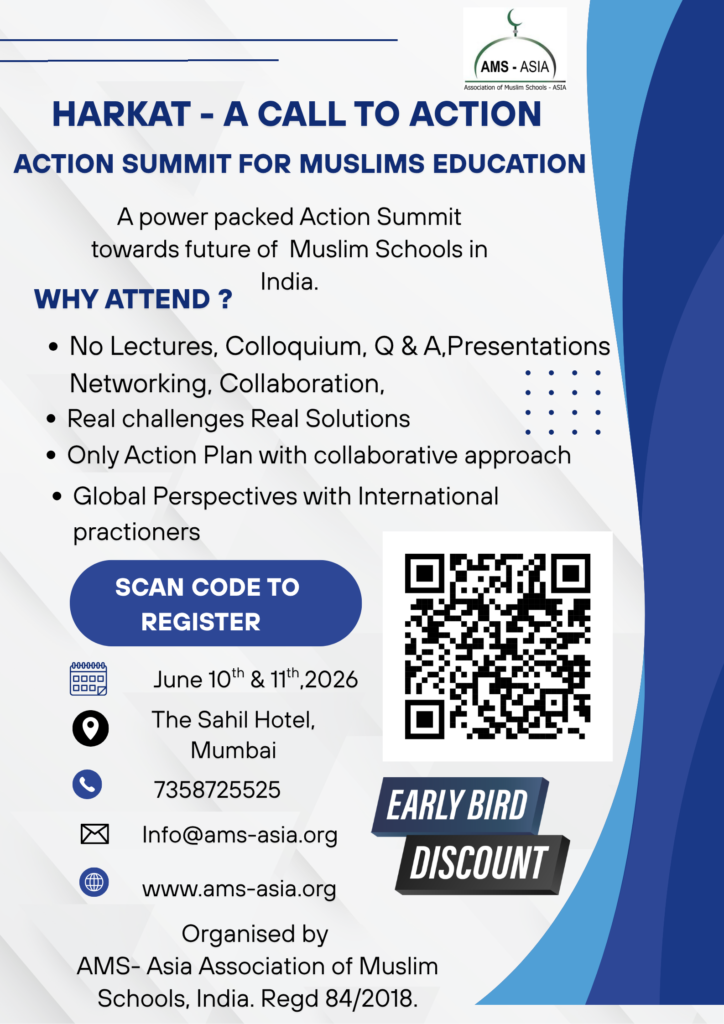
HARKAT is an action-oriented summit created for Muslim educational institutions, school leaders, educators, and contributors who believe that the future of education requires collaboration, responsibility, and measurable action.
This is not a traditional conference designed around long speeches and passive listening. HARKAT is built to create practical outcomes through active participation, structured discussions, and collective problem-solving.
The summit focuses on addressing real educational challenges faced by Muslim schools and institutions while creating frameworks and solutions that can be implemented across communities.
HARKAT is NOT
- Passive listening sessions
- Endless speeches
- Panel discussions without implementation
- Theoretical debates without results
HARKAT Is
- Active participation
- Structured collaboration
- Solution-focused discussions
- Goal-oriented working sessions
- Measurable outcomes
Summit Format
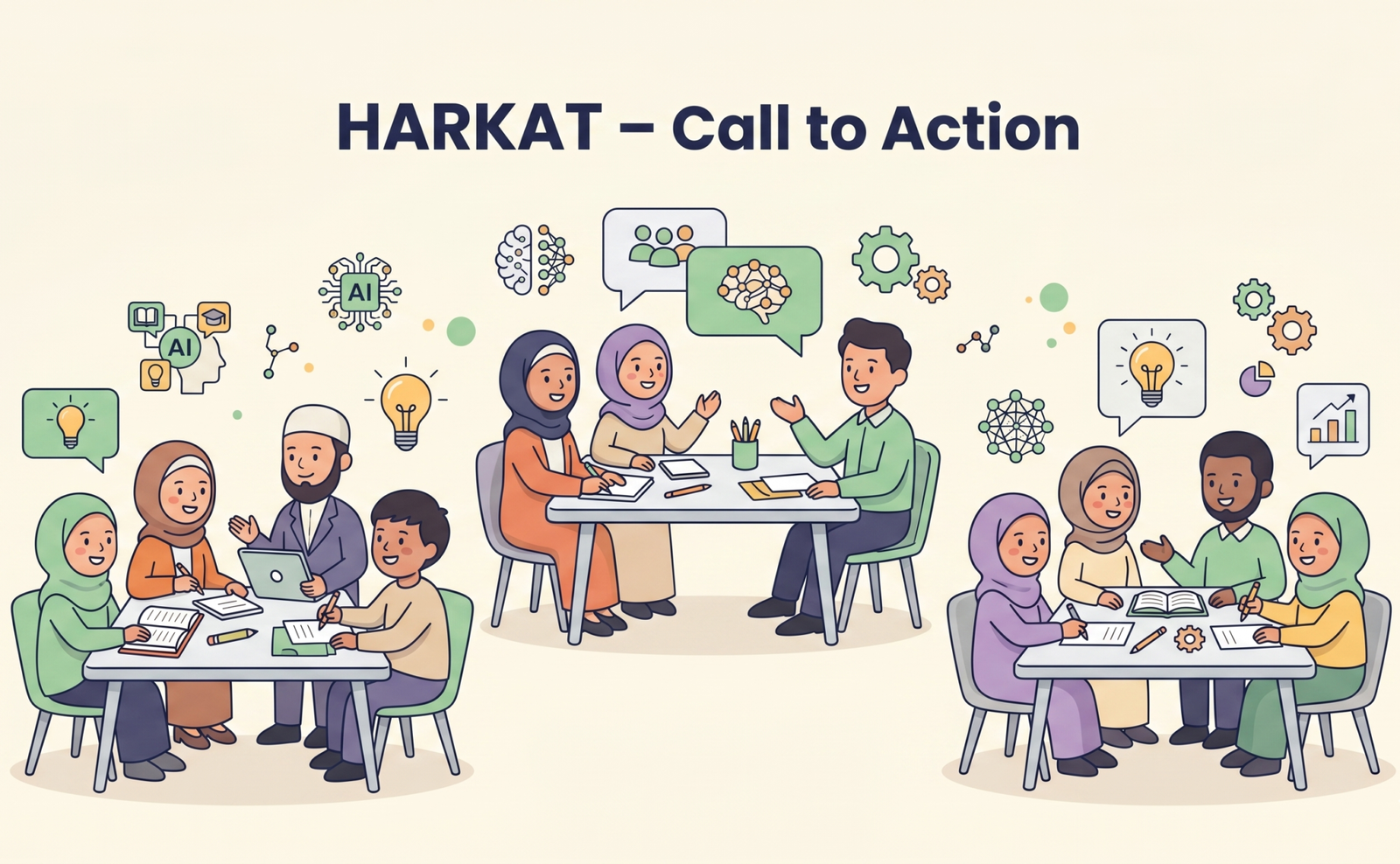
The summit will operate through focused small-group sessions known as Huddles.
Each huddle will include:
- 6 to 10 participants
- One focused problem area
- A facilitator to guide discussions
- A documentation team to record ideas and outputs
The role of the facilitator is not to deliver speeches, but to ensure productive collaboration and keep discussions focused on solutions.
The documentation team will:
- Capture key ideas
- Organize discussion points
- Structure outputs
- Assist in compiling the final action framework
Summit Topics
Community Engagement
Building stronger relationships between schools, families, and communities to create a unified support ecosystem.
Career Guidance
Preparing students for higher education, careers, entrepreneurship, and future opportunities in a rapidly changing world.
Teacher Shortage
Addressing recruitment, training, retention, and professional development challenges facing Islamic educational institutions.
Character Building
Developing ethics, values, discipline, leadership, and responsibility among students.
Financial & Revenue Management
Exploring sustainable financial models and revenue strategies for long-term institutional health.
Governance
Improving institutional leadership, administration, and accountability systems.
Curriculum — AI & Life Skills
Creating future-ready curriculum models that integrate technology and practical life skills.
Social & Emotional Wellbeing
Supporting student mental health, emotional growth, and social development.
Working Methodology
Each working group will focus on:
- Identifying root causes of problems
- Sharing successful existing practices
- Designing practical and scalable solutions
- Developing implementation strategies
The expected outputs from every group include:
- A practical framework
- A working model
- Action-oriented ideas
- Measurable recommendations
The summit is designed to ensure that every discussion leads toward implementation.
Innovation & Best Practice Sharing
HARKAT will also include dedicated sessions where institutions can present:
- Successful educational models
- Innovative ideas
- Low-cost scalable systems
- Community-driven initiatives
- Effective teaching and operational practices
This allows participants to learn from proven methods rather than repeatedly reinventing solutions.
Collective Action Framework
At the conclusion of the summit, all outputs from the groups will be consolidated into:
“HARKAT – Common Minimum Action Framework”
This framework will serve as:
- A collective roadmap
- A shared responsibility document
- A practical guide for implementation
- A living framework owned by all participants
The goal is not to create another theoretical report, but a practical action document that can drive meaningful educational progress.
Summit Schedule
Timing
9:30 AM to 7:00 PM
Including structured breaks and collaborative sessions.
Roles & Responsibilities
Facilitators
Facilitators play a critical role in:
- Guiding discussions
- Maintaining focus
- Encouraging participation
- Driving outcome-based conversations
Documentation Team
The documentation team is responsible for:
- Recording discussions
- Structuring outputs
- Organizing recommendations
- Supporting final framework preparation
Core Coordination Team
The coordination team will:
- Manage summit flow
- Maintain discipline and timing
- Ensure smooth execution
- Oversee collaboration processes